Introduction
Stepping into a fuel station has become a stressful routine for millions of Indian motorists. Over the last few weeks, the local fuel market has witnessed a noticeable shift. While oil marketing companies kept prices under wraps for an extended period, a series of consecutive upward revisions recently caught daily commuters off guard.
If you are wondering why your daily commute is getting costlier, you are not alone. Understanding the petrol price today or checking the diesel price today reveals a clear upward graph. This deep-dive analysis unpacks the core factors driving the recent petrol price hike, the undercurrents of global politics, and what lies ahead for the common man in India.
Why Fuel Prices Are Changing
The simplest answer lies across our borders. India imports more than 85% of its crude oil requirements, making the domestic fuel price in India highly sensitive to international developments.
Several micro and macro-economic factors have converged to create this pressure:
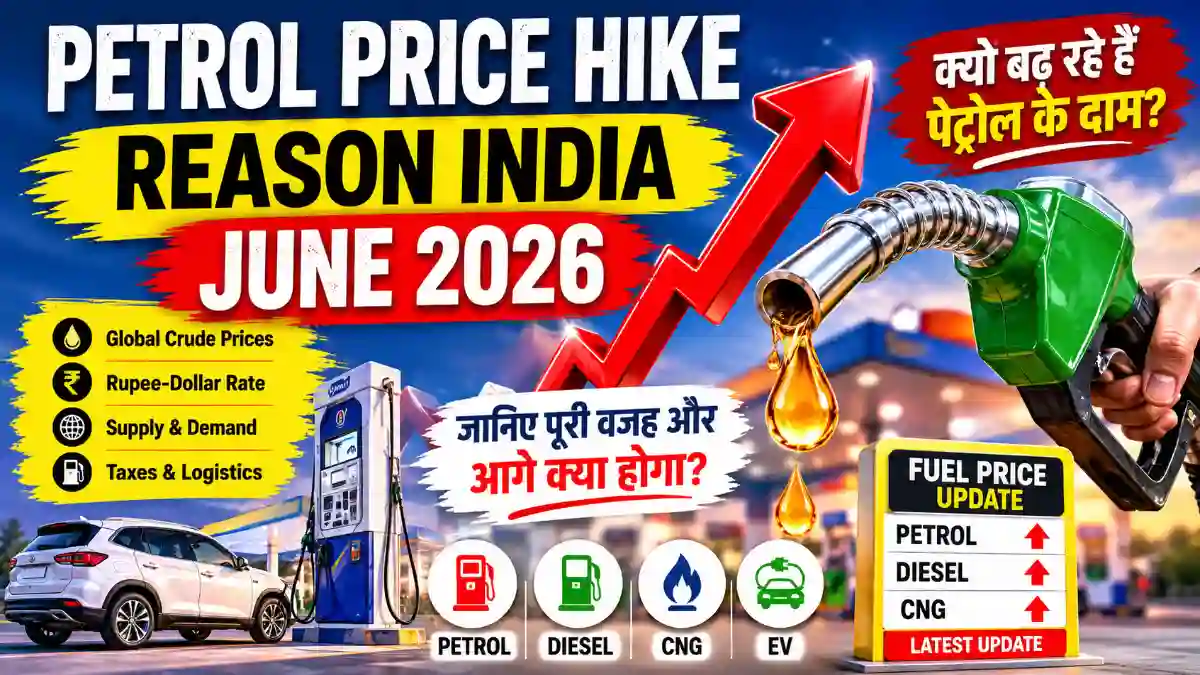
- Middle East Geopolitical Friction: Ongoing tensions in West Asia and slow progress in diplomatic talks have kept energy markets on edge. Fears over potential disruptions in major shipping corridors, such as the Strait of Hormuz, have caused global benchmarks to trade at elevated levels.
- Elevated Brent Crude Benchmarks: Brent crude futures have consistently hovered around the $94 to $95 per barrel mark, pushing up the raw procurement costs for Indian refiners.
- The Rupee-Dollar Equation: Because international oil trade occurs in US Dollars, any depreciation of the Indian Rupee directly amplifies the import bill, making oil costlier even if global barrels remain steady.
Petrol and Diesel Price Impact
When local fuel stations revise their boards upward, the shockwaves travel far beyond car owners and two-wheeler commuters. The collective impact on households is immediate and multi-layered.
The Household Budget Strain
For an average middle-class family, a ₹2 to ₹3 hike per litre means cutting down on other discretionary expenses. Two-wheeler owners, who form the backbone of the Indian commuter workforce, feel the pinch instantly in their weekly budgets.
The Inflationary Domino Effect
Diesel is the primary fuel powering India’s commercial transportation network. When diesel prices go up, transport operators increase their freight charges. This automatically elevates the retail prices of daily essentials, including:
- Fresh vegetables and fruits
- Milk and dairy products
- FMCG goods and packaged items
- E-commerce delivery charges
Shift to Alternatives
The ongoing surge in traditional fuels is forcing a swift re-evaluation among buyers. Many are actively tracking the latest CNG price update or exploring electric vehicles (EVs) to escape the volatile cycles of petrol and diesel.
State-wise Situation
Due to the varying structures of Value Added Tax (VAT) and local freight charges levied by individual state governments, the ultimate price a consumer pays differs substantially across state lines. Below is a snapshot of the prevailing fuel structure across major metro hubs in India:
Metro City | Petrol Price Today (per Litre) | Diesel Price Today (per Litre) | Local Tax Impact |
|---|---|---|---|
New Delhi | ₹102.12 | ₹95.20 | Base VAT applied; relatively lower than other metros. |
Mumbai | ₹111.18 | ₹97.83 | Higher state VAT makes it one of the costliest hubs. |
Bengaluru | ₹110.89 | ₹98.80 | Recent local adjustments have caused a sharp jump. |
Kolkata | ₹113.47 | ₹99.82 | High entry taxes push prices beyond the ₹113 mark. |
Chennai | ₹107.84 | ₹99.65 | Moderate state duties keep it strictly in the middle tier. |
Government and OMC Role
To keep domestic supplies steady amid high global prices, the central government recently revised the special additional excise duties and export levies on fuels like petrol and diesel. These revisions ensure that domestic oil firms prioritize local distribution rather than routing refined products exclusively to lucrative international markets.
On the retail front, state-run Oil Marketing Companies (OMCs) like Indian Oil Corporation (IOCL), Bharat Petroleum (BPCL), and Hindustan Petroleum (HPCL) handle daily pricing.
The Margin Squeeze: Industry reports suggest that despite recent pump price increases, OMCs have been absorbing significant under-recoveries. Analysts estimate that marketing losses still stand near ₹5.5 per litre for petrol and roughly ₹4.5 per litre for diesel, meaning OMCs remain under pressure to close the gap if crude prices do not cool down.
Expert View
Looking closely at the fuel market news, market experts believe India is walking a tightrope between fiscal discipline and consumer protection. While absolute price freezes shield voters from global shocks, they create structural deficits for oil companies.
The current approach indicates a gradual passing of the burden to consumers to prevent public sector energy firms from incurring deep operational losses. Unless the international geopolitical atmosphere stabilizes and Brent crude falls comfortably below the $85 threshold, minor, calibrated price corrections may continue to feature in the coming weeks.
What Consumers Should Do
While macroeconomics are out of your hands, everyday habits can insulate your wallet from severe fuel price inflation.
- Optimize Driving Habits: Maintain correct tire pressure, eliminate unnecessary vehicle weight, and practice smooth acceleration. Aggressive braking and acceleration can lower fuel efficiency by up to 30%.
- Leverage Fuel Rewards: Most major fuel stations partner with prominent banks to offer co-branded credit cards or loyalty applications. Accumulating fuel points can offer reliable cashback benefits over time.
- Consider Smart Carpooling: For daily office commutes, matching schedules with colleagues can split fuel bills down to a fraction of individual costs.
- Track Local Fuel Rates: Always check updated city-specific portals before long journeys to identify low-VAT zones for tank refills.
Conclusion
The petrol price hike reason India June 2026 is a direct reflection of volatile global supply lines combined with structural operational realities closer to home. With international crude exhibiting daily swings and domestic marketing companies managing tight margins, retail fuel prices are likely to experience continued friction. Navigating this phase requires a mix of smart consumer choices, careful personal budgeting, and a close eye on alternative green energy avenues.