4 Saal Baad Pehli Baar Petrol Mehnga: Is This the Start of a Fresh Fuel Price Hike in India?
The Indian fuel market has just thrown a major curveball at the common man. For the last four years, Indian consumers were relatively used to stable or occasionally subsidized fuel rates. Aside from minor local tax adjustments or the festive price cuts, the base prices kept a steady baseline. However, that comfortable streak has finally broken.
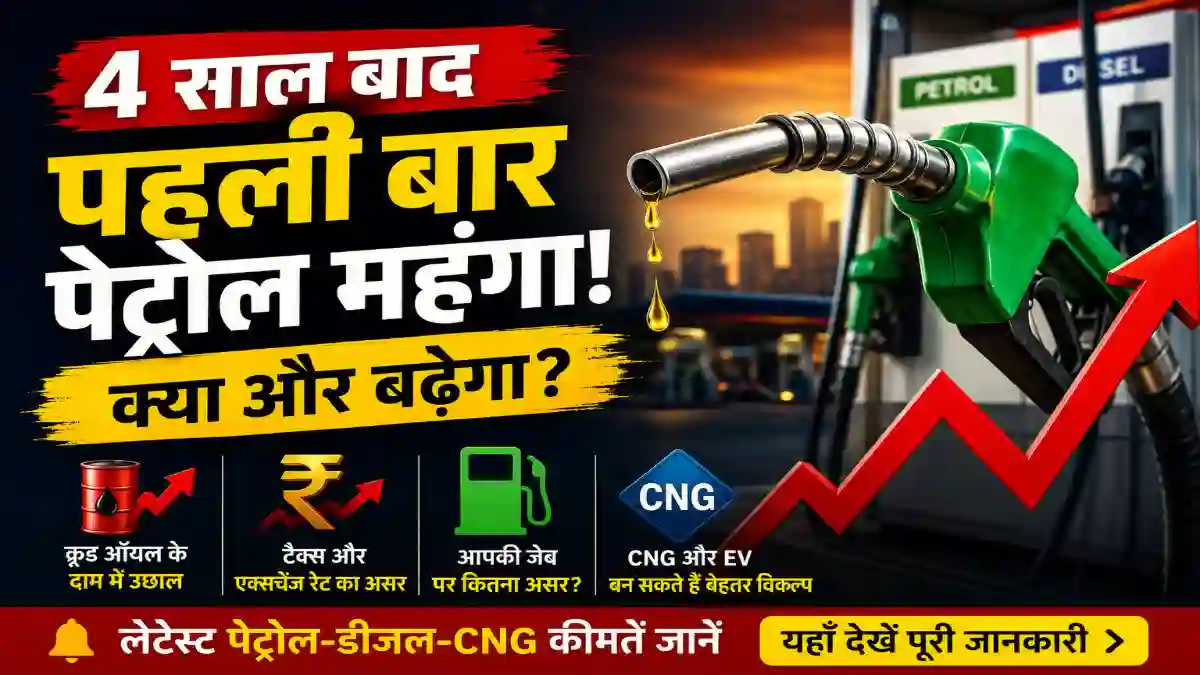
For the first time in nearly 4 years, state-owned Oil Marketing Companies (OMCs) have revised the retail rates upward, triggering a noticeable petrol price hike across major cities.
This unexpected turn of events has left commuters, transport businesses, and households asking one urgent question: Is this just a one-time correction, or are we staring at a continuous rise in the fuel price in India? Let’s look at the actual factors driving this shift and what it means for your monthly budget.
Why Fuel Prices Are Changing
The Indian fuel pricing system is technically deregulated, meaning prices are supposed to move in alignment with international crude oil benchmarks. However, for a long period, OMCs absorbed international volatility to keep domestic prices stable.
The current shift in fuel market news is driven by three major global and domestic factors:
1. Surging International Crude Oil Prices
India imports more than 85% of its crude oil requirements. Over the last few months, geopolitical tensions in the Middle East and tightening supplies from OPEC+ nations have pushed Brent crude prices well above the comfortable $80–$85 per barrel mark. OMCs could no longer absorb the under-recoveries, forcing them to pass the burden onto consumers.
2. Fluctuations in the Indian Rupee (INR)
Because crude oil is traded globally in US Dollars (USD), the strength of the Indian Rupee plays a massive role. The recent depreciation of the Rupee against the Dollar has made crude oil imports significantly more expensive for Indian refineries. Even if crude stays flat, a weaker Rupee automatically pushes the petrol price today higher.
3. Ending of the Voluntary Price Freeze
OMCs like Indian Oil (IOCL), Bharat Petroleum (BPCL), and Hindustan Petroleum (HPCL) had maintained a prolonged pause on daily price revisions to support economic recovery and shield consumers. With refining margins shrinking and losses mounting on marketing operations, a price correction became inevitable.
Petrol and Diesel Price Impact
Whenever there is a change in fuel rates, it creates a cascading effect across the entire Indian economy. It is never just about the person filling up their two-wheeler or car at a local fuel station.
- Household Budgets: A direct increase in the petrol price today and diesel price today immediately expands the monthly commuting expenses for middle-class families.
- Logistics and Freight: Diesel is the absolute backbone of India’s transport and logistics sector. When diesel prices rise, truck operators and delivery services are forced to increase their freight charges.
- Essential Goods Inflation: As transport costs go up, the prices of daily essentials like vegetables, fruits, milk, and FMCG products inevitably climb.
State-wise Situation
Because of varying local body taxes, freight charges, and Value Added Tax (VAT) imposed by different state governments, the final price at the pump looks different in every metro city.
The recent price revision has hit major hubs unevenly:
City | Petrol Price Today (Approx. per Litre) | Diesel Price Today (Approx. per Litre) | Local Impact Level |
|---|---|---|---|
Delhi | ₹96.72 | ₹89.62 | Moderate |
Mumbai | ₹106.31 | ₹94.27 | Very High |
Bengaluru | ₹102.84 | ₹88.95 | High |
Chennai | ₹102.63 | ₹94.24 | High |
Kolkata | ₹103.94 | ₹90.76 | High |
Mumbai continues to bear the brunt of the highest fuel rates among the tier-1 metros due to higher state taxes, while New Delhi remains relatively lower but is experiencing a notable pinch since consumers there haven't seen a hike of this scale in years.
Government and OMC Role
To understand the fuel price in India, one must look at how the price structure is built. When you pay ₹100 for a litre of petrol, a massive chunk of that goes into central excise duty and state VAT.
[Base Price of Crude] + [Refinery Margins] + [Central Excise Duty] + [State VAT] + [Dealer Commission] = Retail Price
The Central Government and state ministries monitor these rates closely. While OMCs technically have the freedom to revise rates daily at 6:00 AM based on a 15-day rolling average of international prices, they often work in tandem with macroeconomic policies. Industry insiders suggest that OMCs are trying to balance their balance sheets before the current fiscal quarter ends, which explains the synchronized nature of this price revision.
Expert View: Will Prices Keep Rising?
Energy analysts believe that this is likely the beginning of a phased correction cycle rather than a temporary blip. OMCs have held back necessary hikes for a long time, leading to accumulated losses in their marketing divisions.
If international crude stays volatile due to ongoing shipping corridor disruptions and global supply cuts, we might see small, incremental hikes of 30 to 50 paise per litre over the next few weeks. However, the government is highly unlikely to allow a runaway inflation spiral, meaning they might step in with minor excise duty cuts if the retail prices start threatening the ₹110 per litre threshold in major regions.
What Consumers Should Do
With the sudden change in the fuel market trajectory, consumers need to manage their energy expenses smartly:
- Track Alternate Options: Keep an eye on the daily CNG price update in your city. CNG remains a highly economical option for city commuters, despite its own minor price adjustments.
- Consider EV Tech: If you are planning to purchase a new vehicle, look deeply into the electric vehicle (EV) segment. The long-term running cost of an EV is proving to be a massive shield against erratic fuel market news.
- Optimize Vehicle Efficiency: Simple habits like maintaining correct tyre pressure, avoiding sudden braking, and turning off the engine at long traffic signals can save up to 10-15% on your weekly fuel consumption.
Conclusion
The sudden uptick in petrol and diesel rates after a four-year period of relative calm is a clear reminder of how closely India's economy is tied to global energy dynamics. While the current hike is manageable, it signals that the era of ultra-stable fuel pricing might be taking a backseat to market realities. Consumers should prepare for regular, minor fluctuations in the coming weeks and plan their commuting budgets accordingly.