Petrol ₹102, Diesel ₹95 — May 2026 Ki Fuel Price Hike Ne Tod Di Aam Aadmi Ki Kamar
Agar aap pichhle kuch hafte petrol pump par gaye hain, toh aapko pata chal gaya hoga — numbers ab waise nahi rahe jaise pehle the. May 2026 mein India mein fuel prices mein ek ke baad ek kaafi teez revisions aaye. Delhi mein petrol pehli baar ₹100/litre ki seema paar karke ₹102.12 par pahunch gaya, aur diesel bhi ₹95.20 tak ja pahuncha.
Yeh ek simple pump price nahi hai — yeh ek aisi chain reaction hai jo aapki chai ki tapri se lekar aapke ghar ki sabzi tak sab kuch mehnga kar deti hai. Is article mein hum samjhenge ki prices aakhir kyun badhein, iski maaar kahan-kahan padi, aur aage kya hone ki ummeed hai.
Petrol-Diesel Prices Kyun Badhe — Asli Wajah Kya Hai?
Pichhle kuch saalon mein oil marketing companies (OMCs) — yaani IOCL, BPCL aur HPCL — ne retail fuel prices ko artificially stable rakha tha. Sarkar aur OMCs dono hi chahte the ki inflation control mein rahe. Lekin is dauraan international crude oil markets mein volatility bani rahi.
May 2026 mein ek saath kai factors ek ho gaye:
- Global crude oil $100/barrel ke paar — US-Iran geopolitical tensions aur Strait of Hormuz ke closure concerns ne international oil markets ko hila ke rakh diya.
- Rupee ki kamzori — Oil globally US dollars mein kharidi jaati hai. Jab rupee dollarke muqable mein girta hai, toh India ka import bill do taraf se badhta hai — crude bhi mehnga aur currency bhi kamzor.
- OMCs ka accumulated loss — Kai mahine tak daam stable rakhne ki wajah se OMCs ko har litre par ghata ho raha tha. Yeh ghata ek haad tak bardaasht karna possible tha, par May 2026 mein woh limit cross ho gayi.
May 15 ke baad se prices mein kaafi baar revision aaya — aur May 25 ke hike ke saath is series ka abhi ek temporary pause aaya hai.
Aam Logon Par Kya Padega Asar
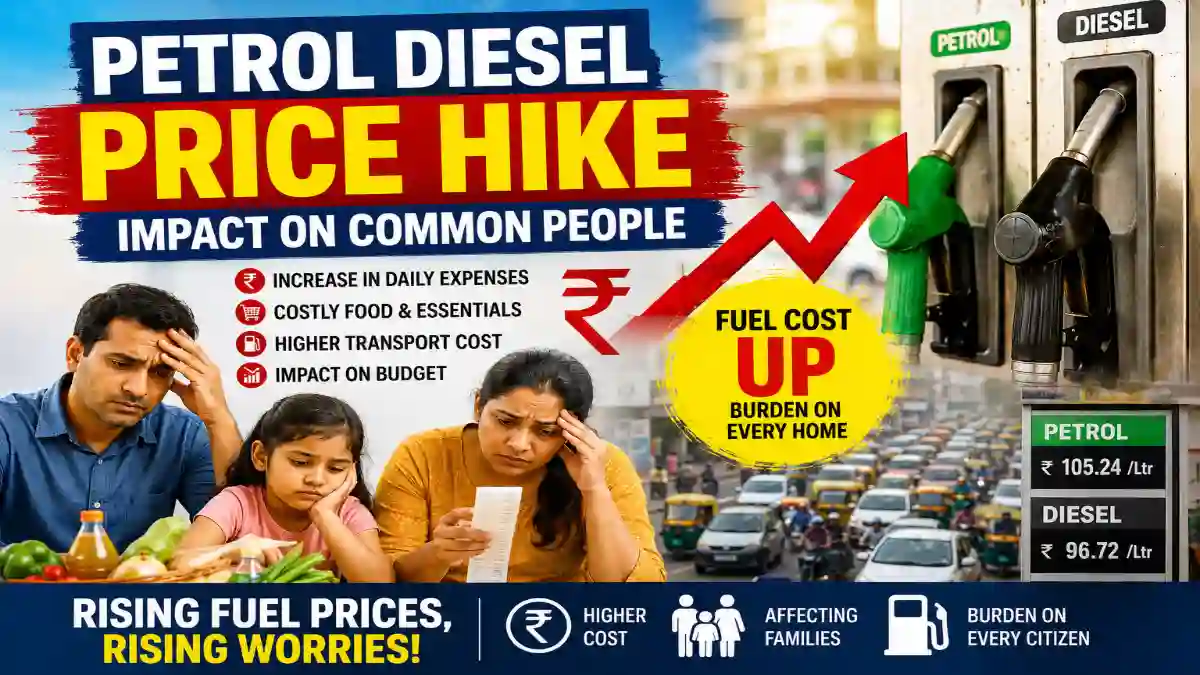
Fuel price hike sirf petrol pump tak seemeeted nahi rehti. Iski tarang economy ke har kone mein jaati hai, aur sabse zyada chot unhe lagti hai jinke paas buffer nahi hota.
Transport mein asar: Auto-rickshaw, cab, aur inter-city buses — in sab par diesel ya petrol ki seedhi dependency hai. Rate badhne par operators ya toh kiraya badhate hain ya phir trips kam karte hain. Delhi-NCR mein already cab aggregators ne surge pricing zyada frequently apply karna shuru kar diya hai.
Grocery aur daily items: Vegetables, fruits, dairy — inn sab ki distribution diesel se chalti hai. Truck freight rates badhne ka sidha matlab hai ki aapki sabzi ₹5-10 pratikg mehnga ho sakti hai. Yeh inflation cycle ka sabse invisible lekin sabse taqleef-deh hissa hai.
Middle class aur salaried log: Jo log roz apni bike ya car se office jaate hain, unka monthly fuel budget significantly badh gaya hai. Agar aap mahine mein 40 litre petrol use karte hain — jo ki ek average commuter ke liye normal hai — toh sirf is hike se ₹100-150 extra per month.
Small businesses: Delivery services, small logistics players, aur kiryana shops — yeh sab diesel ya petrol ki cost seedha apni operational cost mein jodte hain. Margins pahle se tight hain, aur hike unhe aur squeeze karti hai.
Shehar-Wise Petrol Diesel Rate Today
(June 10, 2026 ke anusar)
Shehar | Petrol (₹/litre) | Diesel (₹/litre) |
|---|---|---|
Delhi | ₹102.12 | ₹95.20 |
Mumbai | ₹111.21 | ₹97.83 |
Bengaluru | ₹110.61 | ₹98.54 |
Chennai | ₹107.88 | ₹99.65 |
Kolkata | ₹113.47 | ₹99.82 |
Hyderabad | ₹115.72 | ₹103.82 |
Ahmedabad | ₹101.99 | ₹98.10 |
Note: Yeh rates daily 6 AM par revise hote hain. State taxes aur VAT ki wajah se har shehar mein prices alag hoti hain. Delhi mein keenchi benchmark rate hoti hai, kyunki wahan central taxes zyada control mein hain. Mumbai aur Kolkata mein state levies zyada hain, isliye daam higher dikhte hain.
Sarkar aur Oil Companies Ka Role
India mein fuel pricing ka kaam teen bade sarkari Oil Marketing Companies (OMCs) karte hain:
- IOCL (Indian Oil Corporation Limited)
- BPCL (Bharat Petroleum Corporation Limited)
- HPCL (Hindustan Petroleum Corporation Limited)
Yeh companies roz subah 6 baje retail pump prices revise karti hain, international crude oil price aur rupee-dollar exchange rate ke hisab se. Lekin revision sirf market formula pe nahi hota — political aur economic considerations bhi isme bade role play karte hain.
Taxes ka burden bhi kaafi bada hai. Petrol ki retail price mein roughly 50-55% hissa central aur state taxes ka hota hai. Central government excise duty laagoo karta hai, jabki har rajya apna VAT ya cess alag decide karta hai. Isisi wajah se ek hi desh mein ek litre petrol ₹89 se lekar ₹118 tak ka ho sakta hai.
Central government is waqt prices mein excise duty cut ka koi concrete signal nahi de rahi, par market observers ke mutabik political season ke aate-aate kuch relief possible hai.
Expert Ka Kya Kehna Hai
Market analysts ka maanna hai ki May 2026 ki price hike ek "correction" thi, na ki naya normal. OMCs ko kai mahine se per-litre loss ho raha tha, aur yeh sustainable nahi tha.
Ek energy market analyst ke words mein kahein toh — "Jab crude $100 ke upar ho aur rupee kamzor ho, toh OMCs ke paas dono option bure hote hain: ya toh prices badhao, ya phir government se support maango. Is waqt government ka focus fiscal discipline par hai, isliye prices mein revision ho raha hai."
Global front par dekha jaaye toh US-Iran tensions ka directly Strait of Hormuz par asar pad raha hai — yeh woh critical passage hai jiske zariye world ka ek significant hissa crude oil transport hota hai. Agar tension aur badhti hai, toh $100+ crude ek naya norm ban sakta hai short term mein.
Domestically, India ki crude oil import dependency abhi bhi bahut high hai — roughly 85% crude bahar se aata hai. Isliye domestic insulation limited hai.
Consumers Kya Karen — Smart Tips
Fuel mehnga ho gaya hai, lekin kuch smart moves se aap apna budget thoda sambhal sakte hain:
1. Subah ya raat mein fuel bharo Temperature kam hone par fuel density thodi zyada hoti hai — matlab same amount mein thoda zyada petrol milti hai. Yeh difference chhota hai par har litre count karta hai.
2. Tyres ki pressure check karo Under-inflated tyres mileage 5-10% tak ghata dete hain. Ek baar pump par free check karwao.
3. Smooth driving practice karo Sudden braking aur acceleration fuel economy ka sabse bada dushman hai. Steady speed mein chalein — highway par toh khaas taur par.
4. Petrol card ya cashback offer use karo Kai banks aur credit cards petrol transactions par 1-5% cashback dete hain. HDFC, ICICI, SBI — inke fuel rewards programs check karo.
5. Carpooling ya EV options explore karo Agar daily commute hai, toh ek colleague ke saath carpool karna ₹1000-1500 monthly bach sakta hai. Electric scooter ya e-bike bhi ab kaafi mature technology hai — long-term mein savings badi hain.
6. Petrol price tracker use karo TodayPetrolPrice.in par apne shehar ki daily rate check karo — kabhi-kabhi ek specific din ya time better rate deta hai.
Aage Kya Hoga — Future Outlook
Short term mein — yaani June-July 2026 — prices mein badi giri ki ummeed nahi hai. Crude globally abhi bhi elevated hai, aur US-Iran situation resolve hone mein time lagega.
Agar crude $95-100 ke range mein aata hai aur rupee stabilize karta hai, toh OMCs koi ₹1-2/litre ki marginal relief de sakti hain. Par yeh bhi tab hoga jab political pressure zyada hoga — jaise state elections ki timing.
Kya ho sakta hai jo prices ghata sake:
- US-Iran ceasefire ya koi diplomatic resolution
- OPEC+ production mein badhti
- Rupee ka strengthening (agar RBI effectively intervene kare)
- Government ka excise duty cut lena
Kya prices aur badhegi:
- Agar crude $110+ par jata hai consistently
- Agar rupee 87-88 ke paar jata hai
Consumers ke liye sabse safe strategy abhi — budget mein fuel ke liye 10-15% extra buffer rakhna aur alternate commute options seriously explore karna.
Conclusion
May 2026 ki petrol-diesel price hike sirf ek number change nahi hai — yeh ek broad economic signal hai ki global energy markets mein India ki vulnerability abhi bhi bani hui hai. Jab tak domestic production nahi badhti aur clean energy alternatives mass adoption tak nahi pahunchte, tab tak crude oil ka roller-coaster aam Indian ki zindagi ko affect karta rahega.
Apni city ki daily fuel price ke liye TodayPetrolPrice.in bookmarke rakhein — kyunki informed rehna hi aaj ke time mein sabse smart move hai.