Introduction
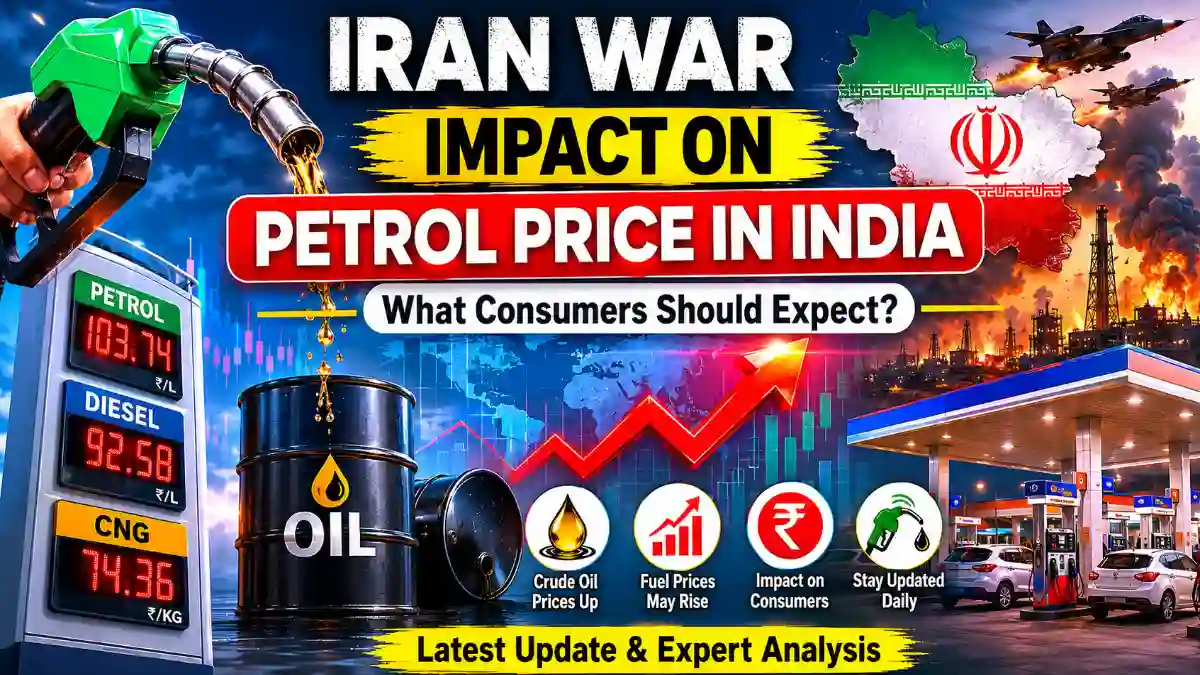
The global energy market is facing one of its toughest phases in recent history. For the common Indian commuter, waking up to check the petrol price today or diesel price today has become a stressful routine. Following weeks of severe geopolitical friction and intense military conflict involving Iran, the delicate balance of international oil supply chains has collapsed.
Since India imports more than 85% of its total crude oil requirements, any major geopolitical disruption in the Middle East directly hits the domestic pocket. In recent weeks, state-run Oil Marketing Companies (OMCs) have aggressively passed the burden of rising international procurement costs onto the retail public, pushing everyday commodity prices higher.
Why Fuel Prices Are Changing
The primary catalyst behind the sudden surge in the fuel price in India is the escalating war in the Middle East, specifically the severe blockades along the Strait of Hormuz.
The Strait of Hormuz Blockade
The Strait of Hormuz is a vital maritime corridor through which roughly 20% of the world’s total oil supply passes. Due to military actions, this channel has faced historic blockades and supply halts. At the peak of the panic, global benchmark Brent Crude breached the $115 per barrel mark, creating massive financial anxiety across import-dependent nations like India.
The Rupee Factor and the Catch-Up Hikes
Even though recent diplomatic efforts and temporary ceasefire talks have cooled Brent crude back below the $100 mark (trading around $97.70 per barrel), retail fuel rates in India have not dropped.
Why is this happening? For over 76 days during the initial escalation, Indian OMCs kept pump prices under an artificial freeze to protect local consumers. Now that the freeze has lifted, oil companies are executing a series of rapid "catch-up hikes" to recover hundreds of crores in accumulated under-recoveries (losses from selling below cost). Furthermore, a weakening Indian Rupee—trading near historic lows against the US dollar—has made crude imports significantly more expensive.
Petrol and Diesel Price Impact
When a petrol price hike hits the fuel stations, its ripple effects are immediately felt across every tier of the Indian economy. While petrol directly impacts the middle-class commuter riding a motorcycle or driving a car to work, the surge in diesel prices acts as a massive inflation multiplier.
The Diesel Domino Effect: Diesel is the absolute lifeline of India’s commercial logistics. It powers interstate freight trucks, railway engines, agricultural tractors, and water pumps. When diesel prices inch closer to the three-digit mark, the cost of transporting essentials like vegetables, milk, grains, and e-commerce goods shoots up.
Furthermore, public transport systems and auto-rickshaw unions are already demanding fare revisions across major cities. For the average family, this translates into a higher monthly grocery bill and increased travel expenses.
State-Wise Situation
Because of varying local taxes, Value Added Tax (VAT), and freight charges imposed by individual state governments, the ultimate price paid at the retail pump changes drastically across different Indian states.
Following a rapid series of four consecutive price revisions that added nearly ₹7.50 per litre to the baseline rates, major metro cities are witnessing record highs.
The current retail prices across key Indian cities stand as follows:
City | Petrol Price Today (per Litre) | Diesel Price Today (per Litre) |
|---|---|---|
Delhi | ₹102.12 | ₹95.20 |
Mumbai | ₹111.21 | ₹97.83 |
Kolkata | ₹113.51 | ₹99.82 |
Bengaluru | ₹110.93 | ₹98.80 |
Chennai | ₹107.77 | ₹99.55 |
Hyderabad | ₹115.73 | ₹103.82 |
As seen in the data, cities like Hyderabad, Kolkata, and Mumbai are facing the highest brunt due to steeper state VAT rates, prompting local associations to urge state governments to sacrifice tax revenues and provide immediate relief.
Government and OMC Role
In India, retail fuel rates are governed by a dynamic daily pricing system, meaning prices are technically supposed to adjust every morning based on international benchmarks. However, state-run OMCs—such as Indian Oil Corporation (IOCL), Bharat Petroleum (BPCL), and Hindustan Petroleum (HPCL)—frequently absorb massive losses during international crises to maintain domestic stability.
To soften the blow of the recent fuel market news, the Central Government recently implemented an excise duty cut on petrol and diesel, bearing a revenue hit of approximately ₹1 Lakh Crore. However, with international crude remaining highly volatile and OMCs still struggling with squeezed refining margins, the space for further central tax cuts remains narrow. The center has actively requested state administrations to lower their respective VAT slabs, which range as high as 30% in certain regions.
Expert View
Energy analysts suggest that the local fuel market will remain under visible stress until shipping safety in the Persian Gulf is completely restored.
"India is in a delicate spot. Even if Brent crude steadies under $100, the historic losses piled up by state retailers during the price freeze mean that consumer relief will be heavily delayed. We are likely looking at high core inflation for the upcoming quarter unless a long-term diplomatic resolution opens up alternative, cheaper Russian or African crude channels," notes an energy research briefing.
Additionally, the compressed natural gas segment has not escaped the conflict's shadow. The latest CNG price update reflects a stark increase in spot LNG prices in Asia, driven by regional infrastructure damage in the Middle East, forcing gas distribution companies to marginally hike retail compressed gas rates.
What Consumers Should Do
With the threat of persistent fuel price volatility hanging overhead, consumers must adjust their daily habits to offset the financial impact:
- Embrace Public Transit & Pooling: Utilizing metro networks, local trains, and ride-sharing apps can drastically cut down individual monthly transit bills.
- Optimize Vehicle Efficiency: Maintain proper tire pressure, avoid sudden braking, and get vehicles serviced on time to maximize fuel economy.
- Leverage Fuel Credit Cards & Apps: Many Indian banks offer co-branded fuel cards providing 2% to 5% savings via cashback points and surcharge waivers at specific OMCs.
- Consider the EV Transition: If you are planning a vehicle purchase, shifting toward Electric Vehicles (EVs) or hybrid models offers a long-term cushion against erratic fossil fuel prices.
Conclusion
The ongoing conflict involving Iran has vividly proven how deeply connected the common Indian household budget is to global geopolitics. The rapid fuel hikes observed over the past few weeks are the direct result of restricted maritime trade routes and a pressured domestic oil-refining sector. While the government and OMCs work to balance fiscal deficits against consumer inflation, prices are expected to remain elevated for the foreseeable future. Staying informed, tracking local rate movements daily, and optimizing fuel consumption are the best steps forward for everyday citizens.