Introduction
The Indian automotive market is undergoing a structural shift. For decades, the average Indian car buyer had a straightforward choice: petrol for low initial cost or diesel for long-distance efficiency. Later, compressed natural gas (CNG) emerged as the budget-friendly alternative. However, a steady climb in daily running costs has disrupted this traditional dynamic.
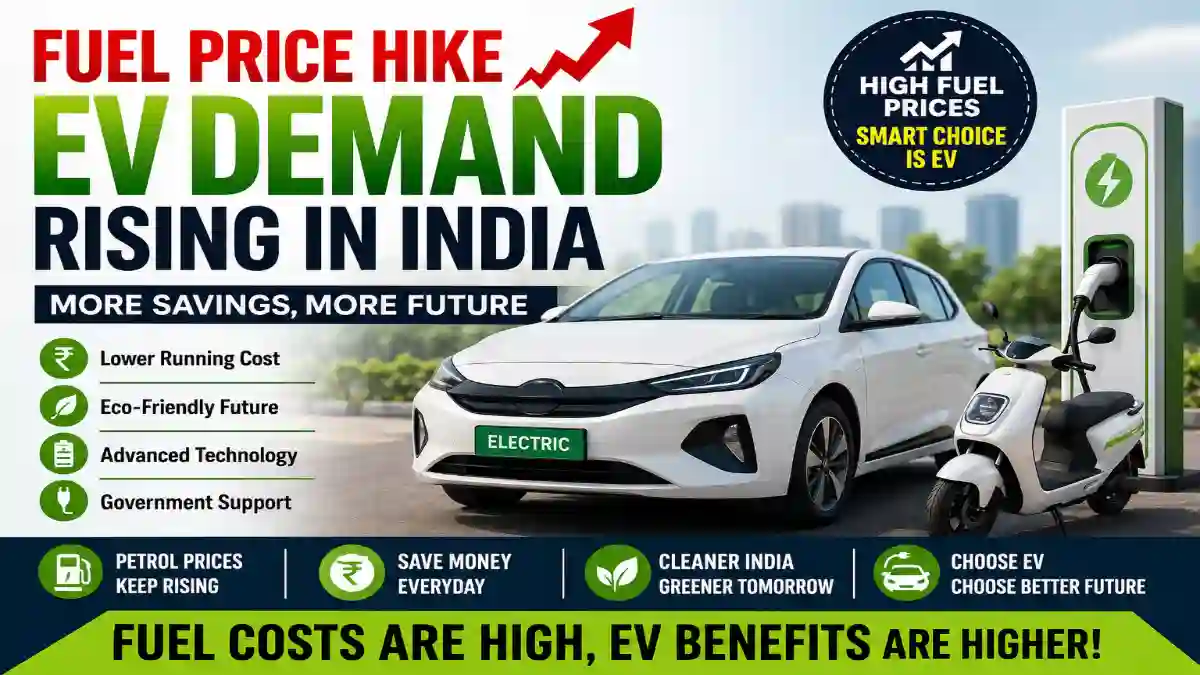
As the petrol price today hovers at challenging levels across major cities, the economic pressure on regular commuters is intensifying. This consistent upward trend in conventional fuel prices acts as a powerful catalyst for change. Millions of vehicle owners are reconsidering their daily transport choices, leading to a visible surge in the demand for electric vehicles (EVs) across the country.
Why Fuel Prices Are Changing
Understanding the underlying reasons for high fuel costs requires looking at global oil market trends and domestic taxation. India imports more than 85% of its crude oil requirements, making our local pumps highly sensitive to international price movements. Ongoing geopolitical tensions in West Asia and volatility in the global energy supply chain have kept Brent crude oil prices elevated.
Furthermore, state-run Oil Marketing Companies (OMCs) have had to adjust retail prices to cope with import costs. The situation is compounded by a complex domestic tax structure consisting of central excise duty and state-level Value Added Tax (VAT). Because these duties represent a substantial portion of the retail price, any upward movement in global crude oil immediately shows up as a petrol price hike at local filling stations. Even the alternative fuel segment has seen regular adjustments, with recent CNG price update reports showing increases across multiple states due to rising input costs for natural gas.
Petrol and Diesel Price Impact
The steady rise in the diesel price today and the cost of petrol hurts the household budget of the middle-class consumer. For an average commuter driving 30 to 40 kilometers daily, monthly fuel bills have escalated into a major monthly expense.
This financial strain goes beyond personal vehicle owners. Higher diesel rates push up primary freight and transportation costs. When it costs more to run commercial trucks, the retail prices of essential goods, vegetables, and daily commodities rise. This creates inflationary pressure that impacts every household. As conventional vehicles become more expensive to keep on the road, the low operating cost of an electric car or two-wheeler becomes an appealing financial alternative.
State-Wise Situation
The retail cost of fuel varies significantly across India due to differences in local state taxes and freight charges. This direct variation directly influences how quickly consumers in different regions are switching to electric alternatives.
- New Delhi: In the national capital, the petrol price stands at ₹102.12 per litre, while diesel is retailing at ₹95.20 per litre. While lower than other metros, local green subsidies make EVs increasingly popular here.
- Mumbai: The financial capital faces some of the highest fuel burdens. Petrol is priced heavily at ₹111.21 per litre and diesel costs ₹97.83 per litre. This high price environment is driving a massive conversion rate toward electric two-wheelers and passenger cars.
- Bengaluru: With petrol priced at ₹110.93 per litre, tech-savvy commuters in India's Silicon Valley are rapidly adopting electric mobility to lower their daily office commute costs.
- Chennai: Retailing at ₹107.74 per litre for petrol, consumers in Chennai are actively browsing the EV market for dependable family vehicles.
- Kolkata: With petrol rates touching ₹113.51 per litre, the economic benefit of switching from internal combustion engines to electric power has never been clearer for local drivers.
Government and OMC Role
Both the regulatory policies of the government and the pricing strategies of Oil Marketing Companies like Indian Oil Corporation (IOCL), Bharat Petroleum (BPCL), and Hindustan Petroleum (HPCL) play a major role in shaping the fuel price in India. OMCs review fuel prices daily based on international product prices and currency exchange rates.
To balance this pricing pressure, the Indian government is actively promoting the adoption of cleaner technologies. Through central initiatives like the FAME (Faster Adoption and Manufacturing of Hybrid and Electric Vehicles) scheme, alongside various state-level EV policies, the government offers financial incentives, road tax waivers, and reduced registration fees for electric vehicles. This multi-layered policy framework aims to make clean energy vehicles economically competitive with traditional choices.
Expert View
According to automotive industry observers and fuel market analysts, the current wave of EV adoption is no longer just a temporary trend driven by environmental awareness. It has turned into a calculated economic choice for the consumer. When petrol and diesel cross critical psychological thresholds, the math shifts heavily in favor of battery-powered options.
While an electric vehicle requires a higher upfront purchasing cost compared to a traditional petrol car, the operational economics tell a different story over the long term. Running a petrol vehicle can cost anywhere between ₹6 to ₹8 per kilometer, whereas an electric car typically costs less than ₹1.50 per kilometer to run. For high-mileage drivers and daily commuters, this substantial operational gap allows them to recover the initial premium paid for an electric vehicle within a few years of ownership.
What Consumers Should Do
Navigating the changing dynamic of the fuel market news requires a practical approach to managing monthly transportation budgets:
- Calculate Your Mileage: If your daily commute exceeds 40 kilometers, shifting toward an electric two-wheeler or car can offer immediate, noticeable relief to your monthly household budget.
- Monitor Local Rates: Keep an eye on regional price updates. Understanding the local tax structure helps you evaluate the total cost of ownership of conventional versus electric options.
- Explore Hybrid Alternatives: If full electric mobility feels premature due to highway charging limitations, consider a strong hybrid vehicle to reduce overall fuel consumption.
- Optimize Vehicle Efficiency: For your existing petrol or diesel vehicles, maintain proper tyre pressure and stick to timely service schedules to get the best possible fuel economy.
Conclusion
The ongoing transition toward electric vehicles in India is directly linked to the fluctuating nature of fossil fuel prices. As traditional energy markets face global supply pressures, the long-term cost of running a petrol or diesel vehicle will likely remain a significant financial burden for the average citizen. By checking reliable portals for accurate data on daily fuel changes, Indian consumers can make well-informed financial decisions that safeguard both their personal mobility and their hard-earned household savings.